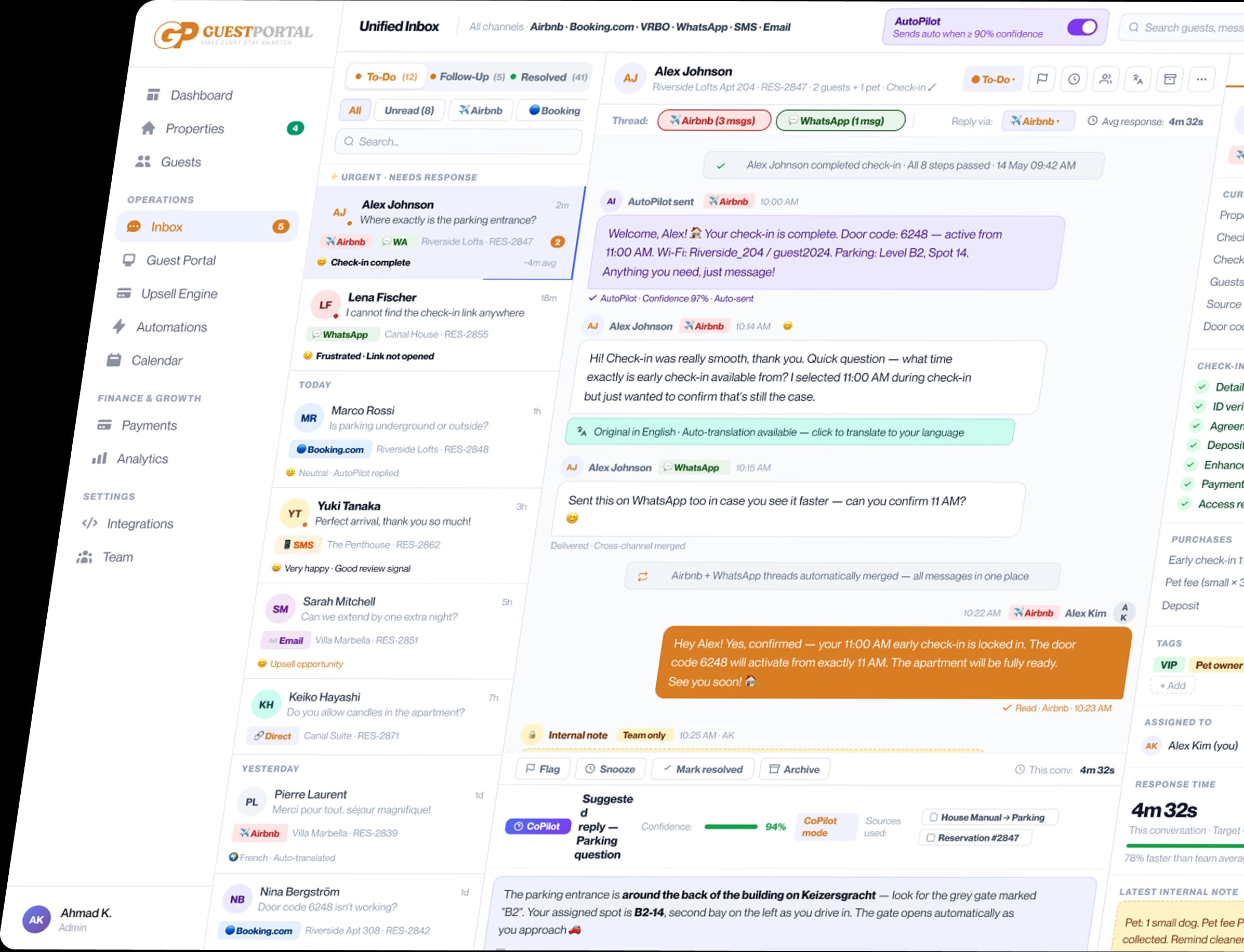
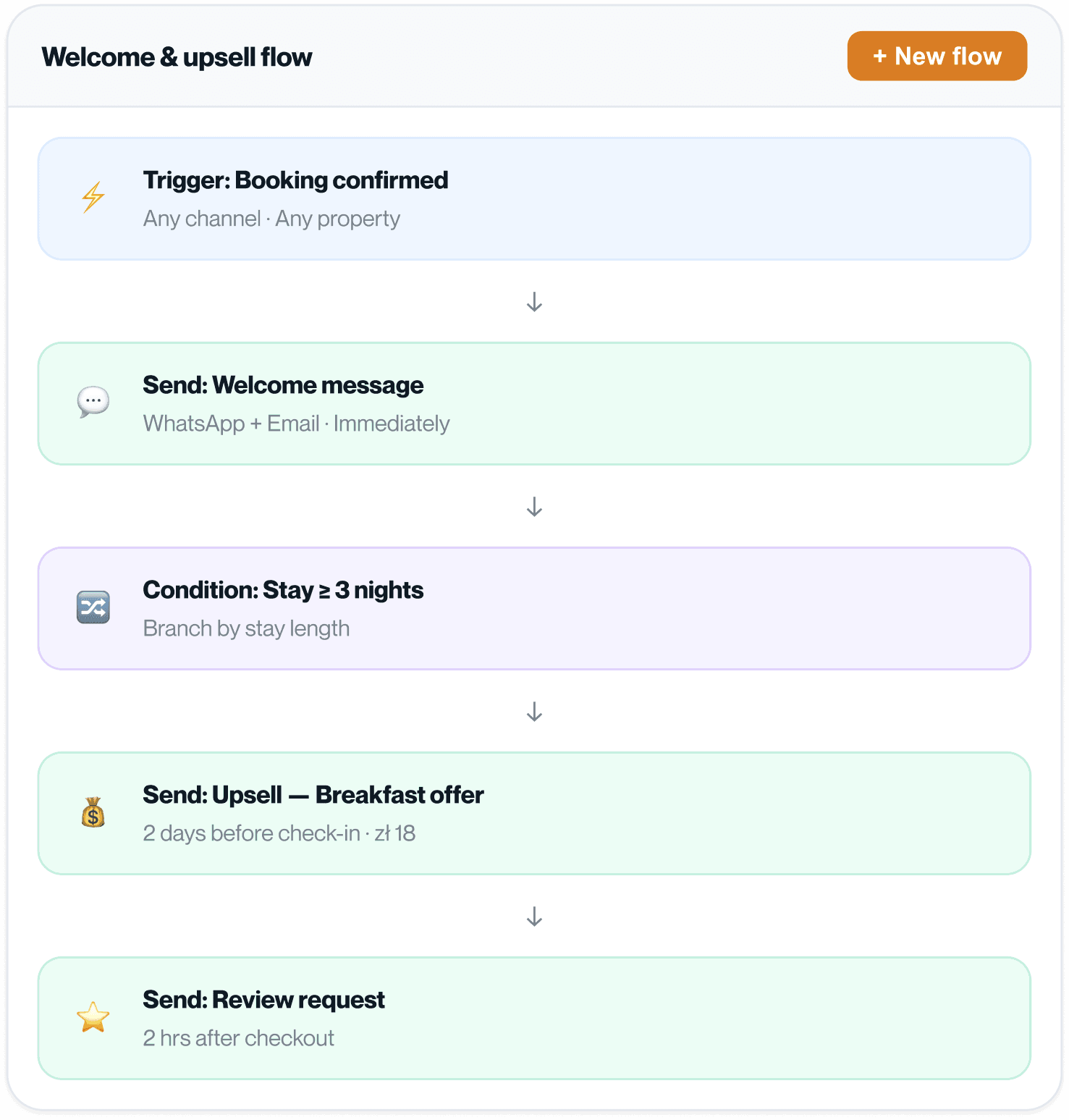
Traditional short-term rental access is broken. When confirmation emails send door codes instantly, property managers lose all leverage to collect ID documents, sign house rules, or secure damage deposits.
The Three Access States: Blocked, Ready, Released
Conditional Access Release introduces a state machine architecture. When a reservation imports from Guesty or Airbnb, the access state is Blocked. Only when identity is verified, house rules accepted, and damage protection confirmed does the state transition to Ready.
If your smart lock delivers codes before the security deposit clears, you do not have an automated workflow — you have an open liability.
Preventing Early Entry Disputes
Guests frequently show up hours early and use their code while cleaners are still turnovering the property. Conditional Access prevents the smart lock pin from becoming active until the scheduled arrival time — unless the guest purchases an automated Early Check-in enhancement.
Security Notice
Over 42% of property damage incidents occur during stays where guest verification was skipped or left incomplete before arrival.
Access Control Best Practices
- ✓Never dispatch lock codes in static confirmation emails.
- ✓Set access release triggers to 1 hour before scheduled arrival.
- ✓Allow emergency manual release and revocation with a single click.